CultureFeb 2026
What installation art taught us about UX
Nobody reads instructions in a gallery. The piece either pulls you in or it doesn't — websites work exactly the same way.
Nobody reads instructions in a gallery. The piece either pulls you in or it doesn't — websites work exactly the same way.
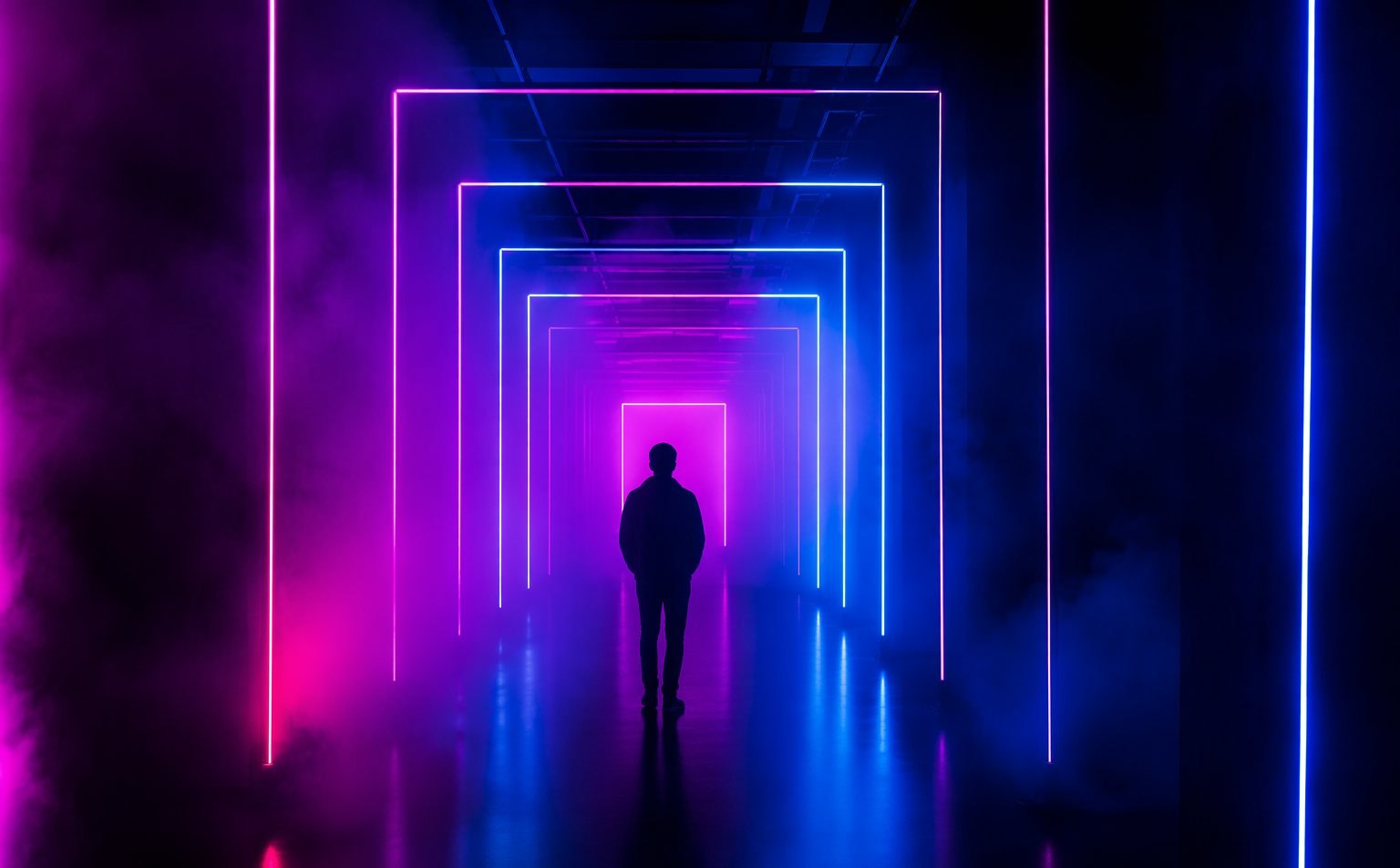
Building Neon Ritual for Galerie Huit changed how we design interfaces. In a gallery, there is no onboarding flow. The work has about four seconds to pull someone across the threshold, and the only feedback mechanism is whether they stay or drift to the next room. Watching 9,000 people make that choice teaches you things no analytics dashboard will.
"Nobody reads instructions in a gallery. Nobody reads them on your homepage either."
The first lesson: response beats instruction. The tunnel never explained itself — it simply reacted to your presence, and reaction invites play. We now build interfaces the same way: hover states that answer immediately, scroll that acknowledges velocity, buttons that feel pressed before they're clicked.
The second: pacing is a feature. The installation breathed slower as crowds grew, and dwell time doubled. Digital products have the same lever — animation timing, reveal order, even scroll friction. UX isn't the map of a space. It's the tempo of moving through one.
Next article
In defense of the boring website (sometimes) →